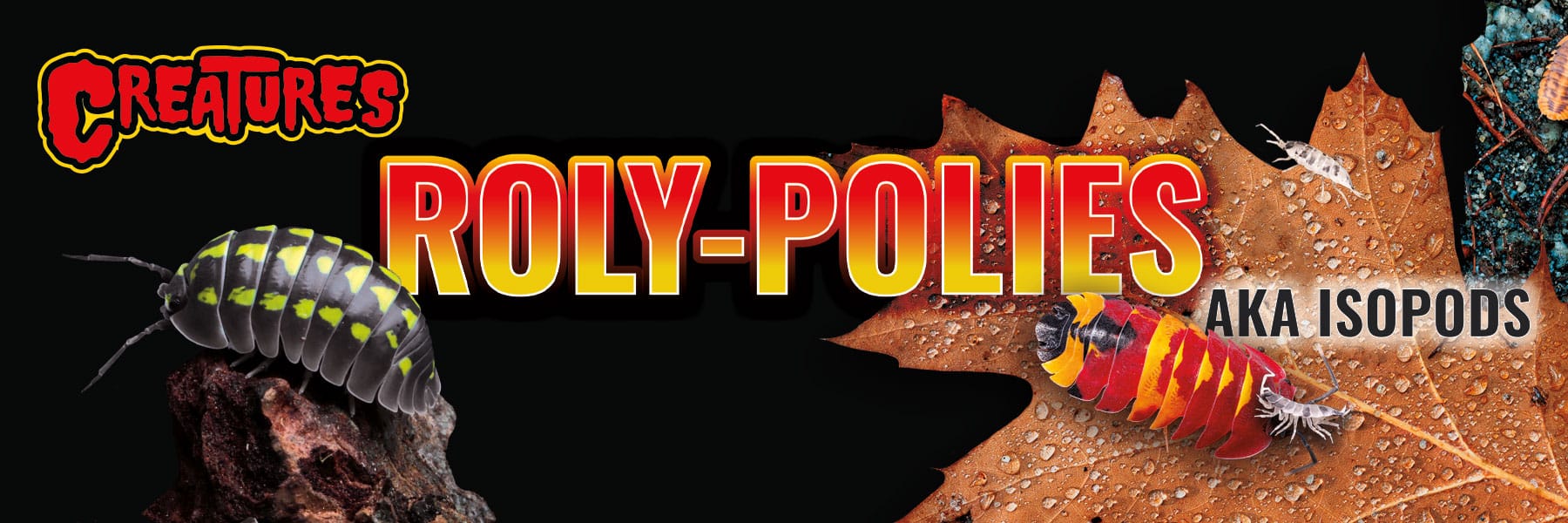
Welcome to the wonderful world of Isopods!
Isopod: Also known as Roly-poly, woodlouse, pill bug, sow bug, doodlebug
Introduction
You have probably come across isopods in nature, whether on sidewalks or under rocks and leaves in your garden. These little decomposers play an essential role in the environment by feeding on decaying material and returning nutrients to the soil. But did you know these adorable critters also can make great pets?
Isopods are a great way to introduce kids to responsible pet care and teach them about how even small creatures are important and play a vital role in an ecosystem. Isopods are low-maintenance and great for small spaces like kids’ bedrooms, playrooms, classrooms, dorm rooms, and office spaces. They are fascinating to watch and rewarding to keep!

This guide will help you learn how to care for pet isopods and showcase some incredible variations!

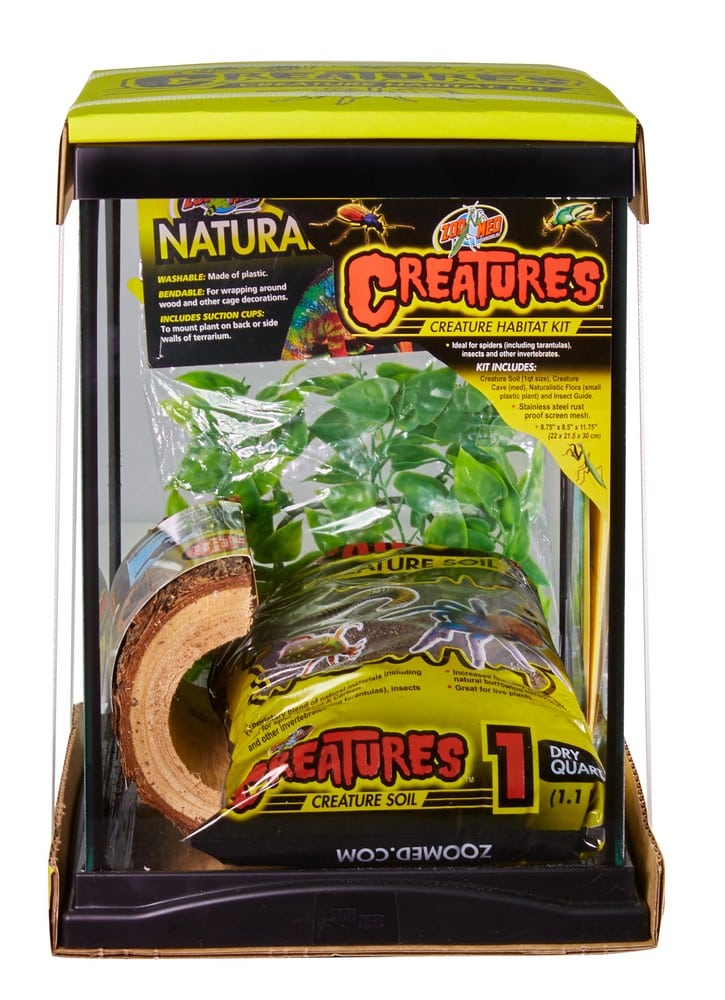
Zoo Med’s new Roly Polly kit and Creatures habitats are great enclosure options. Be sure to choose an enclosure with a solid base and vents near and/or at the top. Although most isopods have difficulty climbing up smooth glass or plastic walls, a leaf or stick inadvertently left leaned on the side could create a ladder leading to escape! Small vents at the top of the enclosure will help ensure that your isopods have a source of fresh air while keeping them contained.
Substrate
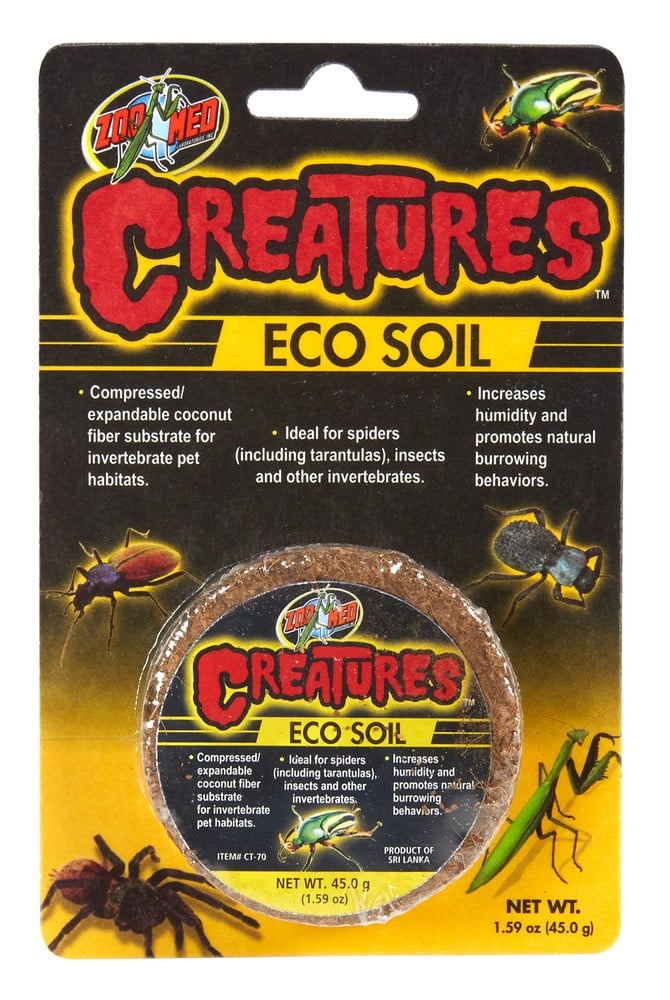
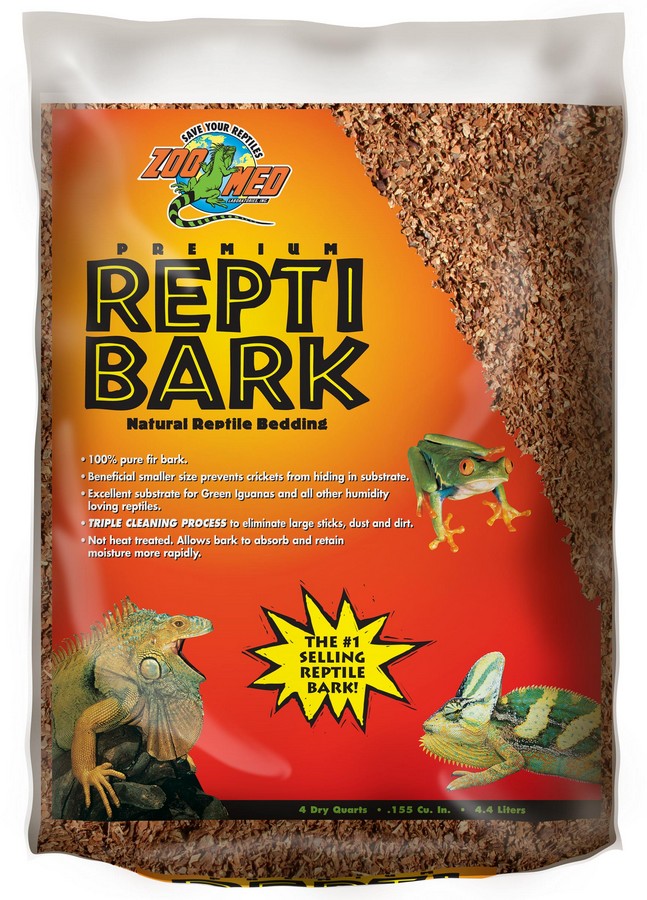
Substrate is one of the most important components of an Isopod habitat. Isopods live directly on the substrate, and some will burrow into it. Add a 2-4″ layer of humidity-retaining substrate like the Creatures® Eco Soil or Creatures® Soil. When setting up the habitat, mix enough water so the substrate clumps but isn’t soaked. Creature Floor or Reptibark® can be mixed in to add texture to the substrate and can help provide structure for isopods that love to burrow.

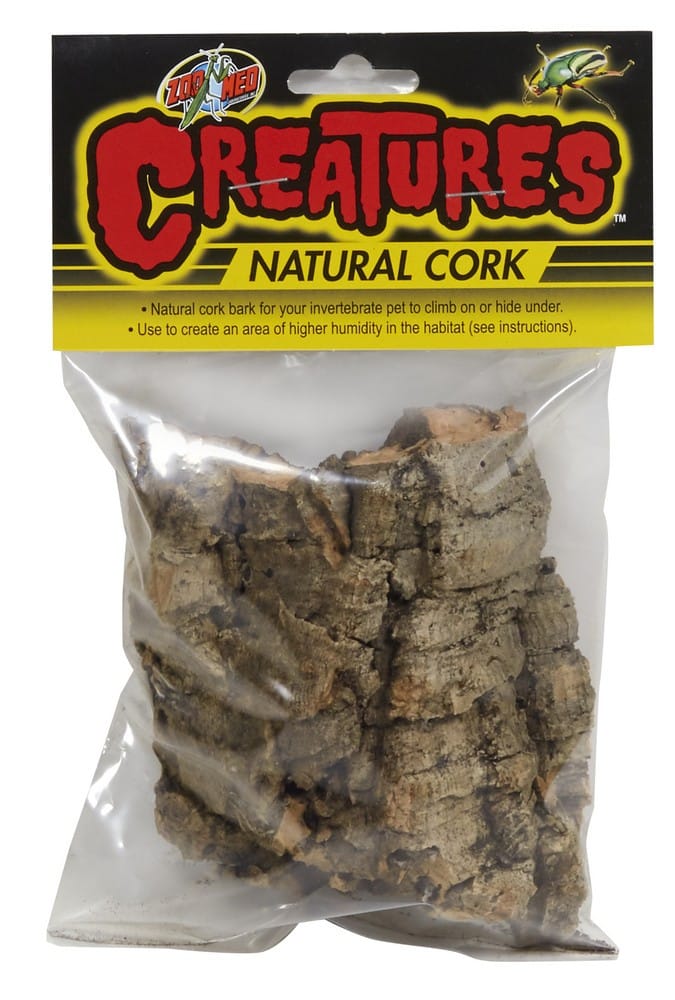
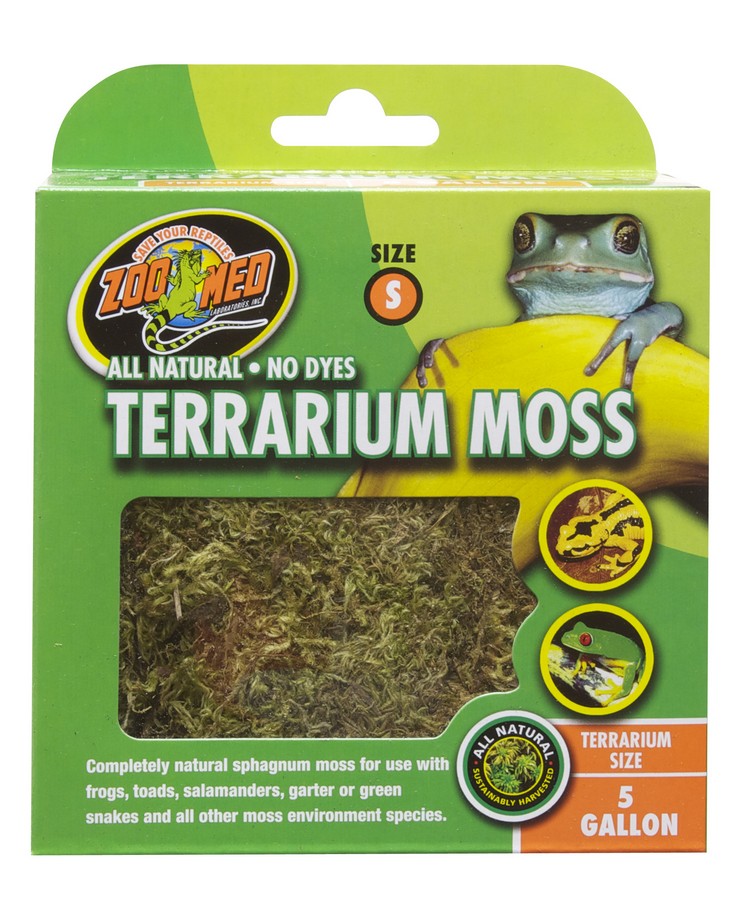
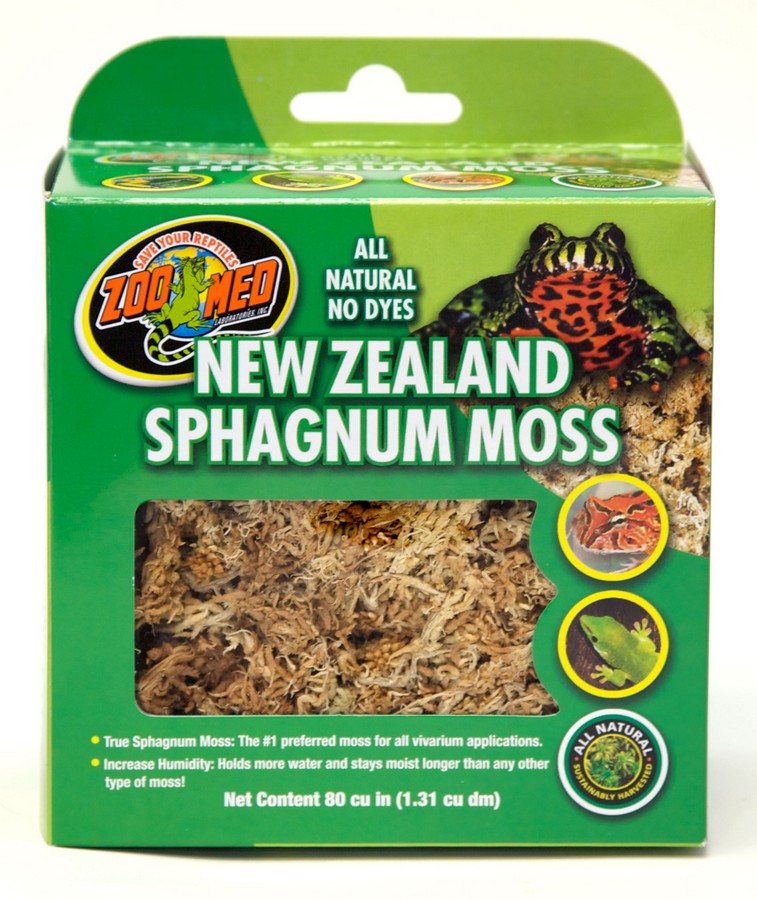
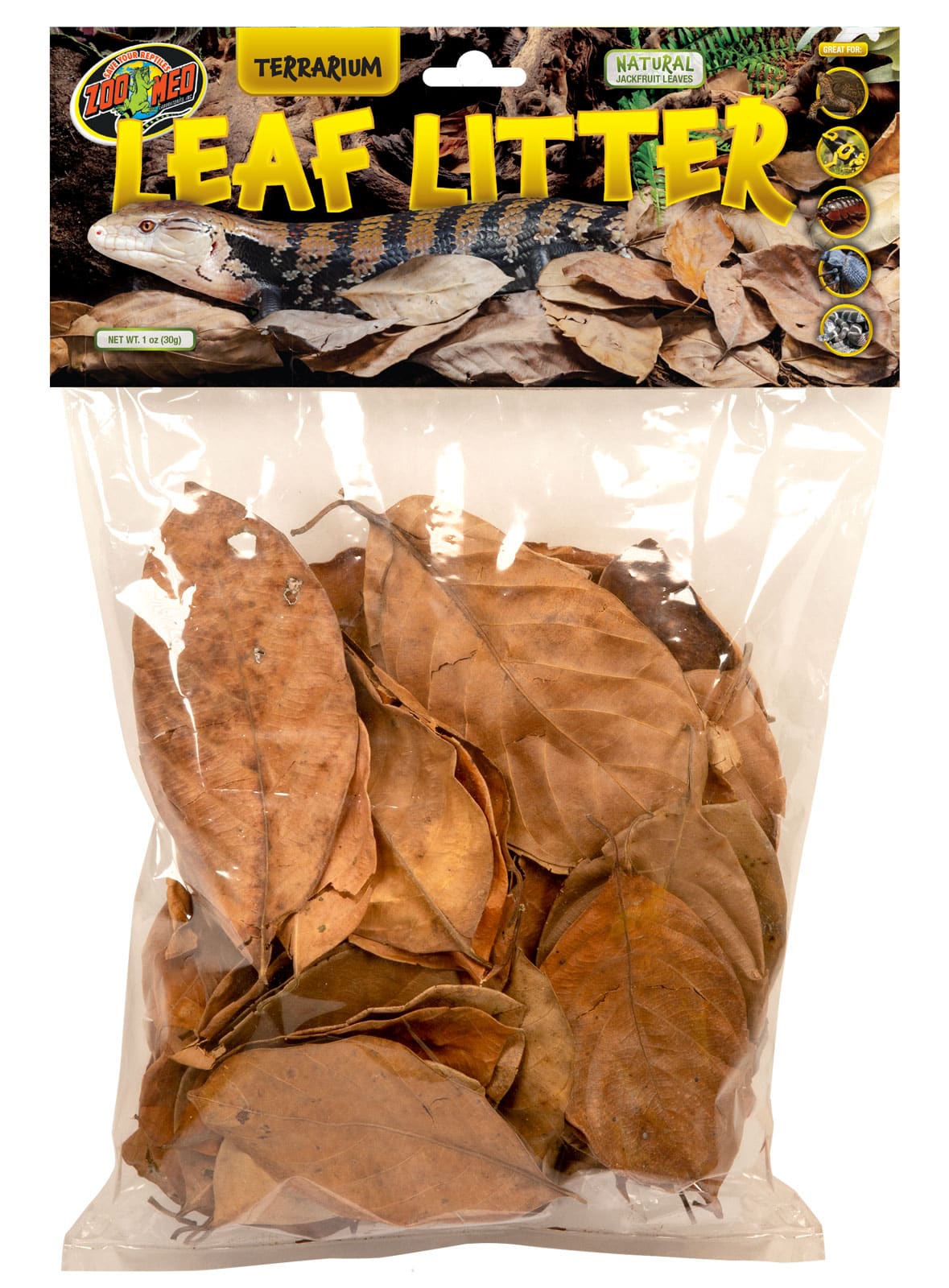
Top your soil with moss, Creatures® Leaf Litter, and Creatures® Cork to help maintain humidity and provide shelter and a natural food source.
Additional things, like bark and leaves, can even be collected from your own yard. However, please be sure to only collect items that are free of pesticides and fertilizers. Clean collected items to prevent unwanted guests from moving in with your isopods by freezing for 24 hours or rinsing and sun-drying for several days.
Humidity
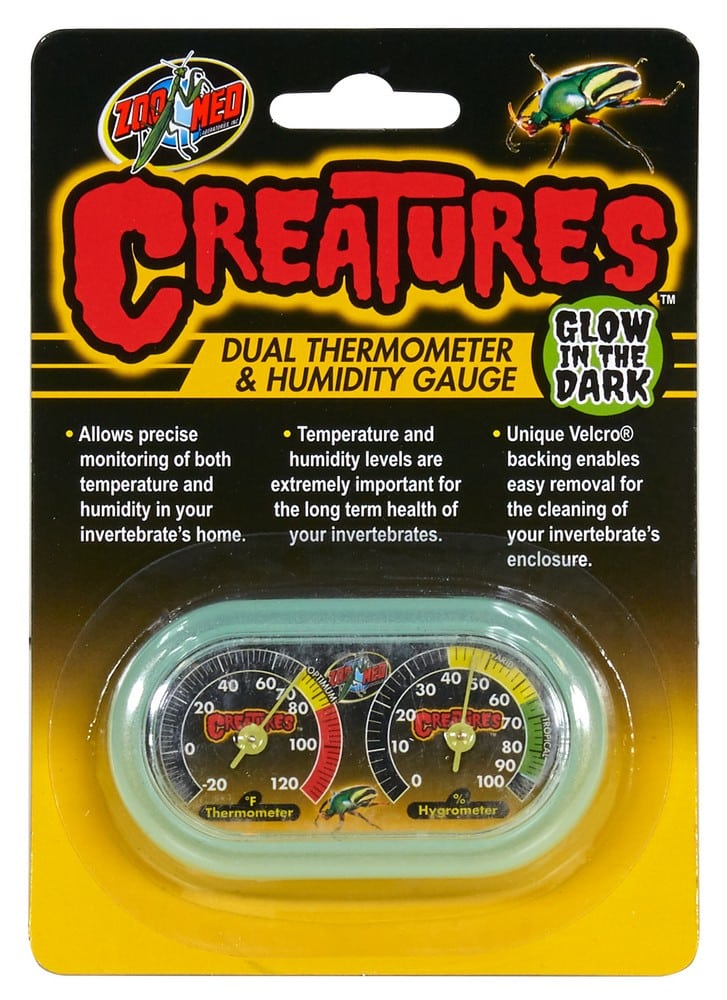
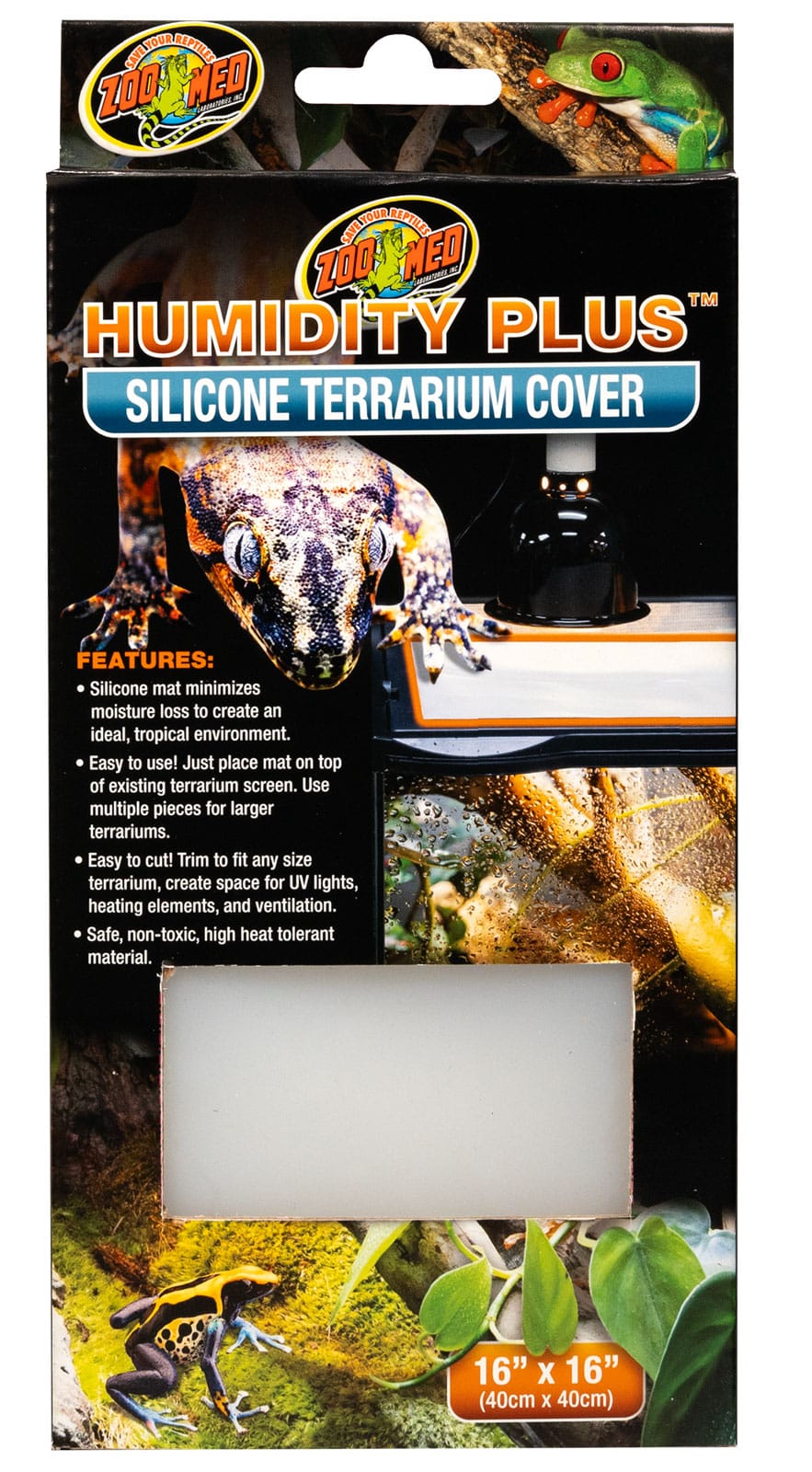
Proper humidity is very important since isopods are actually crustaceans and breathe through gills that must be kept moist. Maintain humidity by using a deep substrate layer and misting the habitat. A humidity gauge, like the Creatures ® Dual Thermometer & Humidity Guage, is a great tool to monitor the habitat and know when to mist. Alternatively, misting one half of the habitat and leaving the other half drier allows the isopods to regulate themselves. Misting the isopod habitat is a fun activity for kids! If you use a screen top enclosure in a dry climate and find it difficult to maintain humidity, a Humidity Plus silicone terrarium cover can be trimmed to cover about 2/3 of the top keeping more moisture in while still providing sufficient ventilation.
Lighting and Heating
Most isopods are comfortable at room temperature (68-78*F) and ambient light. Avoid placing your habitat in direct sunlight, as it can create a greenhouse-warming effect in the terrarium. An additional heat source might be needed if you keep your home cold. *Use CT-30 CreatureTherm heater on a glass terrarium or Use RH-7 can be used on the side of a glass or plastic habitat if needed.


Diet
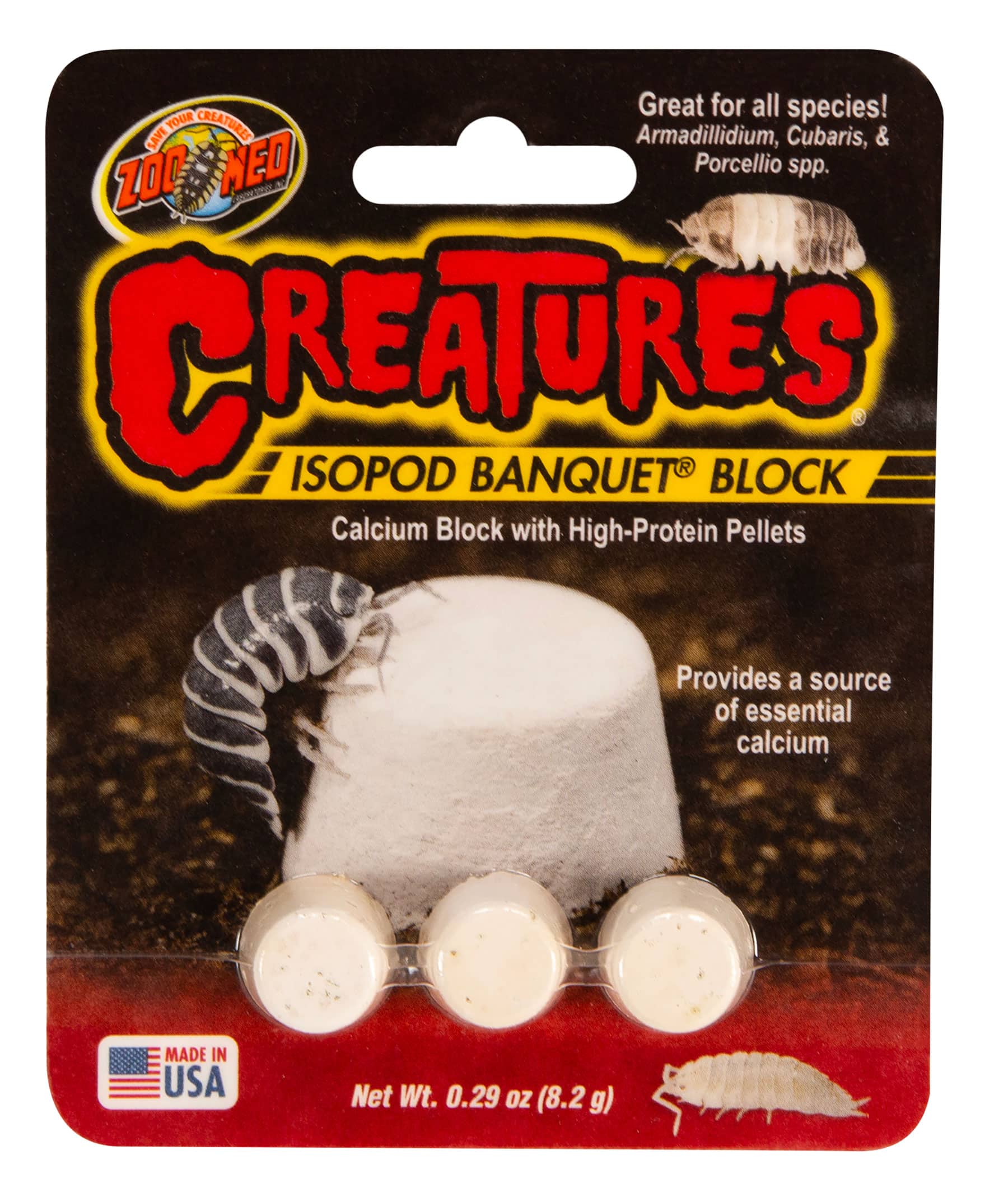
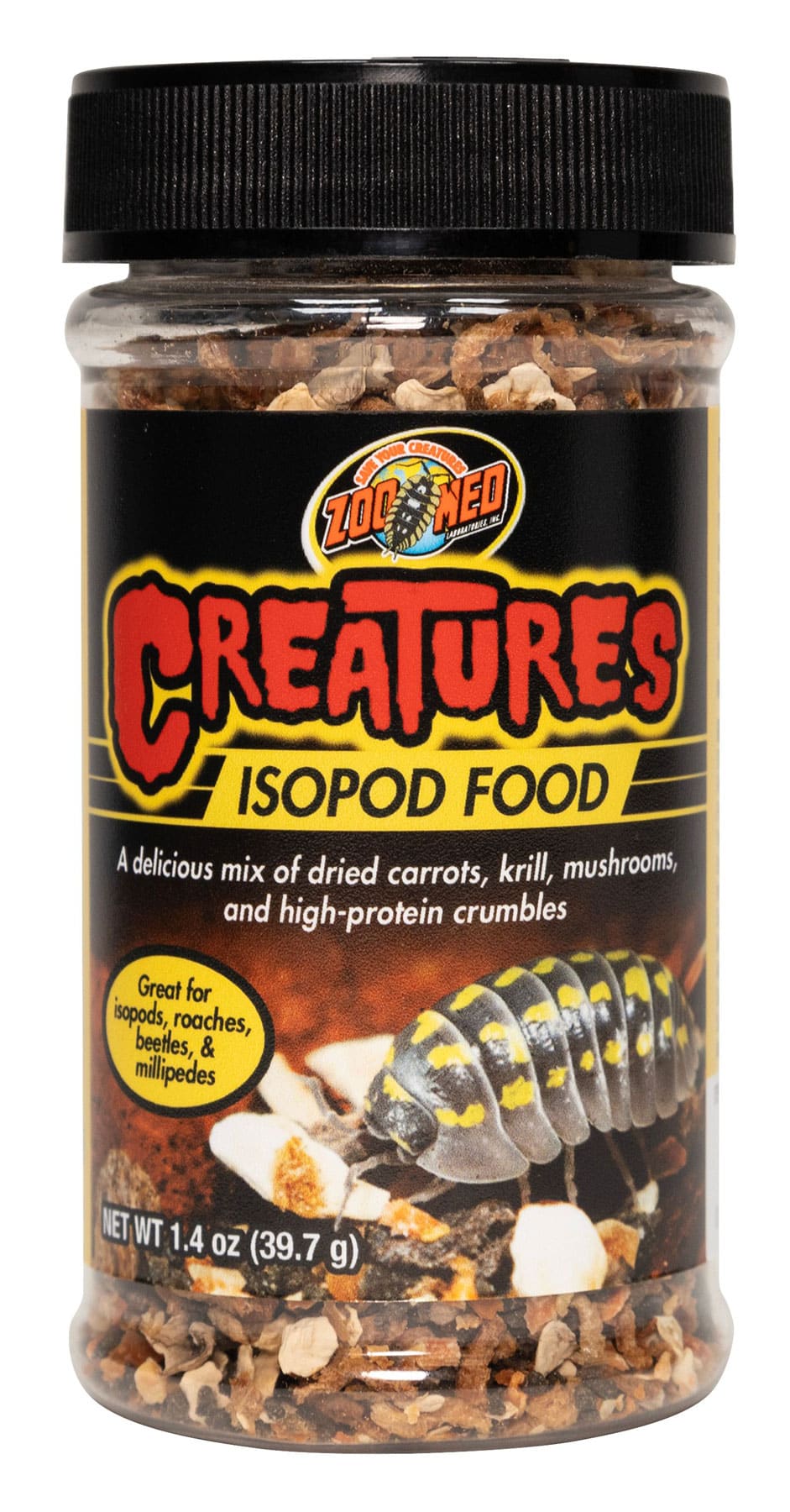
Isopods are omnivorous detritivores which means they feed on decaying plant and animal matter such as fallen leaves, wood, vegetation, fungi, and animals in the wild. Their primary food source should be dried leaf litter, so make sure some is always available. Offer a variety of things to eat with the Creatures® Isopod Food, which contains carrots, krill, mushrooms, and high protein crumbles. Isopods also need access to a source of calcium which can be offered by using the Creatures® Isopod Banquet blocks. Due to their high-humidity habitat, food will naturally mold. However, you do not need to remove this unless you have them in a bioactive setup with other animals.
Maintenance
Isopods will readily eat their leaf litter, so it will need to be refreshed often. Over time, you may need to add a little water to the substrate on one side if it gets too dry. Misting the habitat is an excellent way to add moisture to the substrate and a great activity for kids! Additional substrate may need to be added as your isopods break it down every 4-6 months. Unless you have native isopods, anything (substrate, décor, old food, etc.) removed from your enclosure should be frozen for at least 24 hours to prevent their accidental release into the wild.
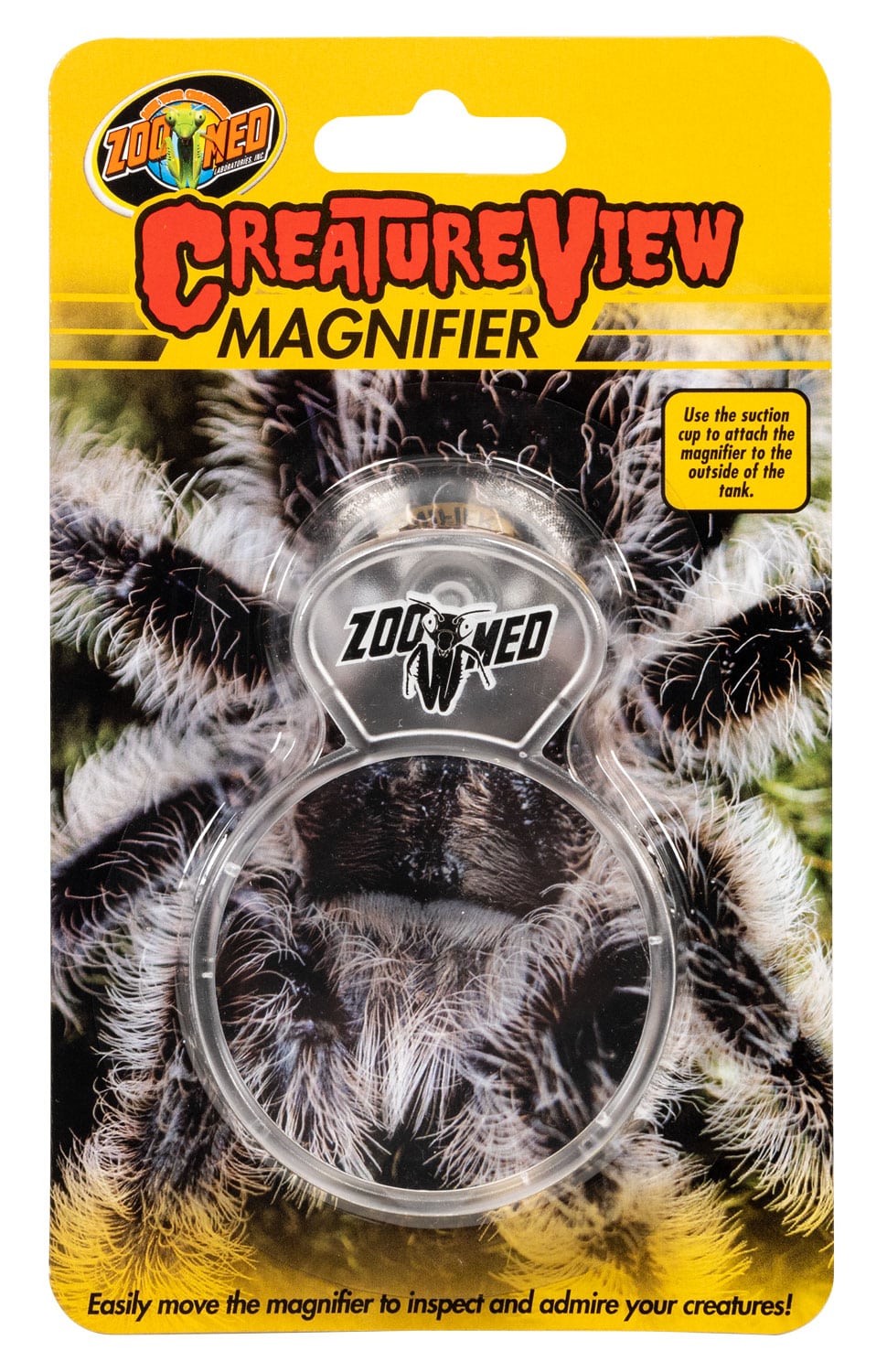
If properly maintained in a group with males and females, isopods will readily reproduce! Keep your eyes out for tiny babies crawling around on substrate, in leaf litter, and on food. They do not require any extra care but are fun to find. Use a Creature View Magnifier to find and observe your isopods and babies! (CT-15)
Isopods as “Clean-up Crew”
Isopods can be an important and effective part of a “Clean-up Crew” for a Bioactive terrarium! In nature, their role in the environment is to clean up and break down waste and decaying matter, so in a bioactive terrarium these little decomposers can do just what they are made to do- eat waste and break down organic matter. They will consume waste such as excess food, dead plant material, and even pet waste and convert it to usable nutrients for vivarium plants. Learn more about Bioactive terrariums by visiting our Bioactive Education Page.

There are many different types of isopods found all over the world, and all look more or less alike with armor-like multi-segmented bodies, seven pairs of jointed limbs, and two pairs of antennae. Most Roly-polies that are kept as pets belong in one of three categories.
Armadillidium
True roly-polies are characterized by their classic dome-like shape and ability to roll into a tight ball, which belong to the genus Armadillidium.
A few examples: A. maculatum (Zebra), A. vulgare (orange vigor, grey -native, St. Lucia), A. nasatum (Peach), A. gestroi, A. klugii (clown)
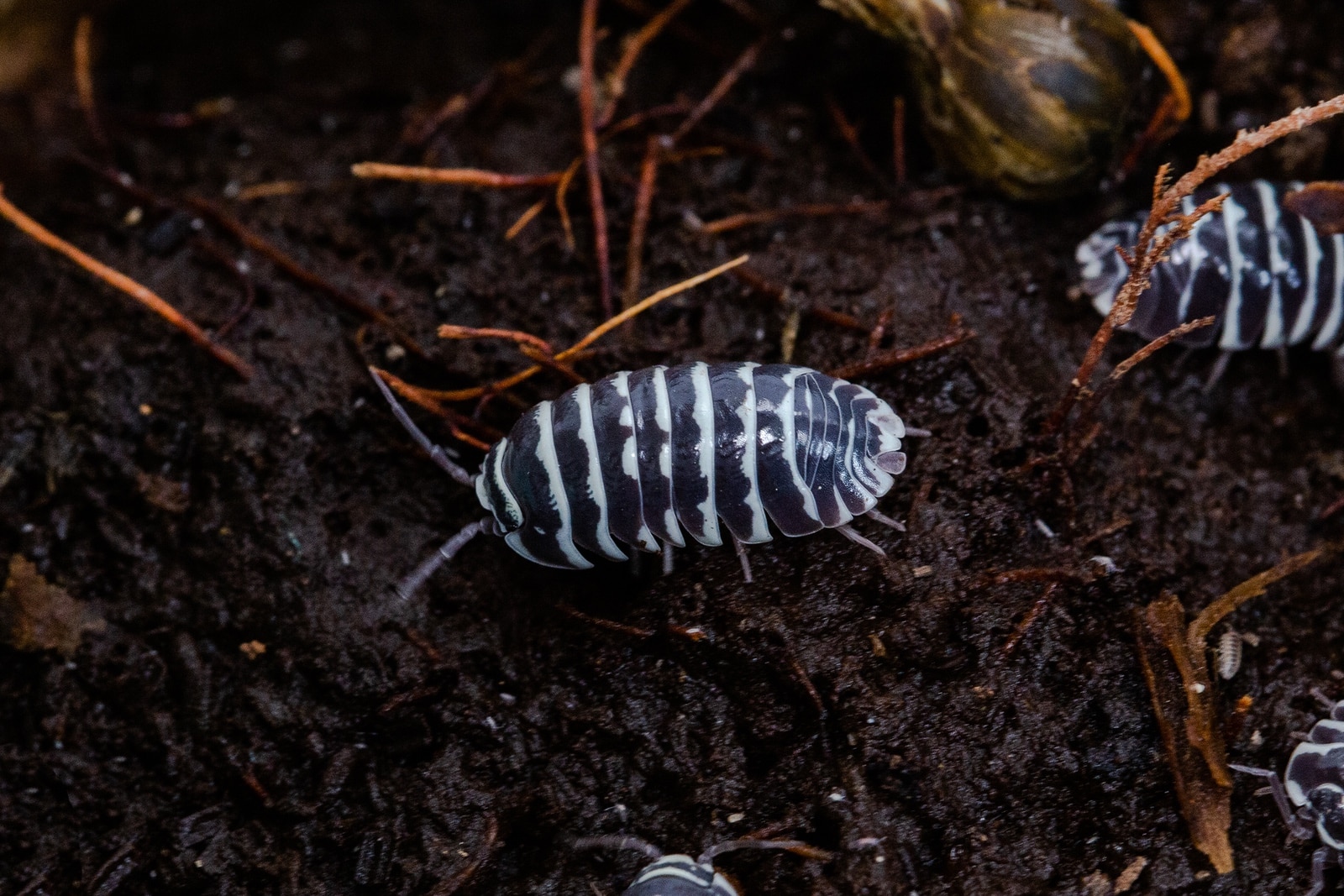
A. maculatum (Zebra),
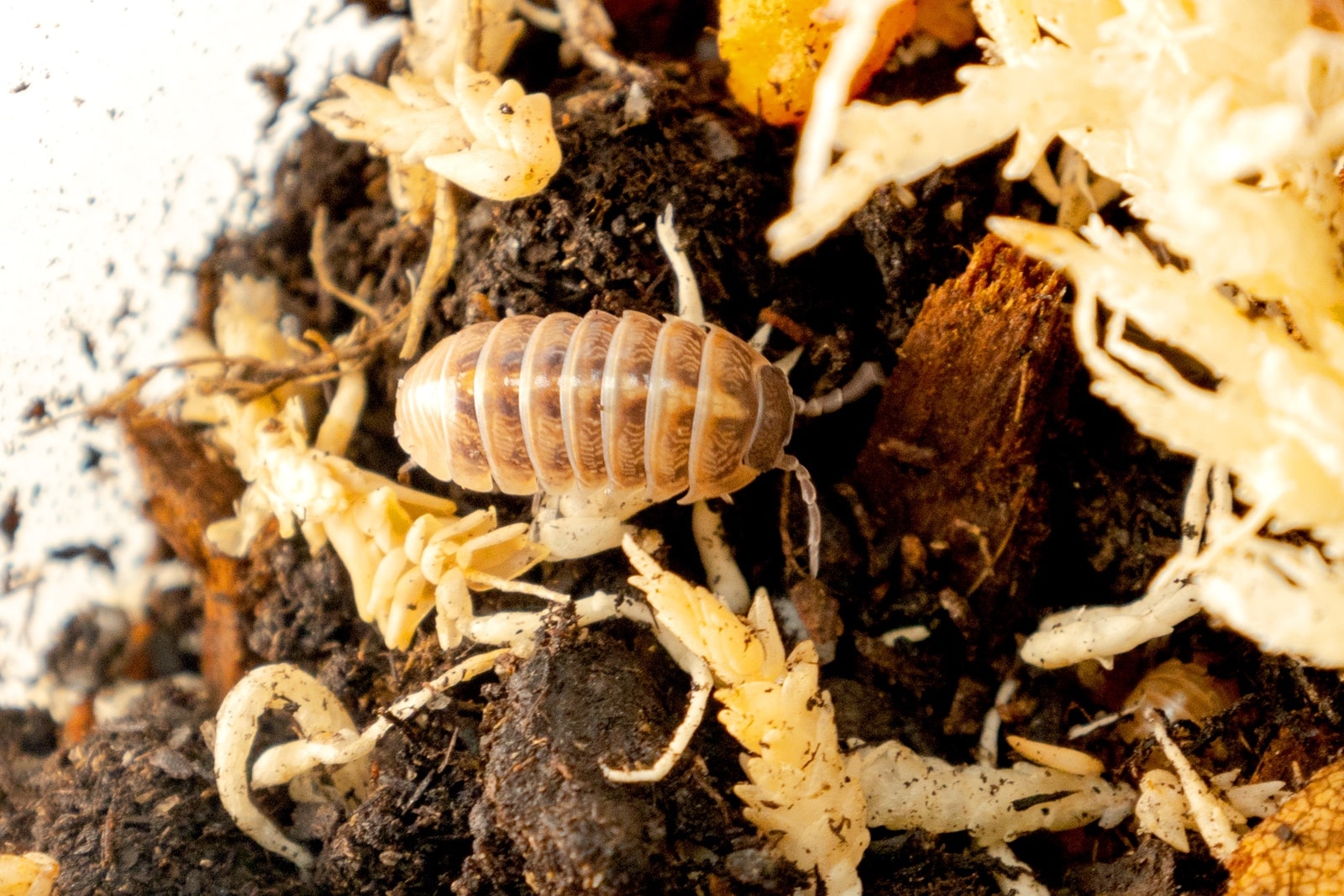
A. vulgare (St. Lucia)
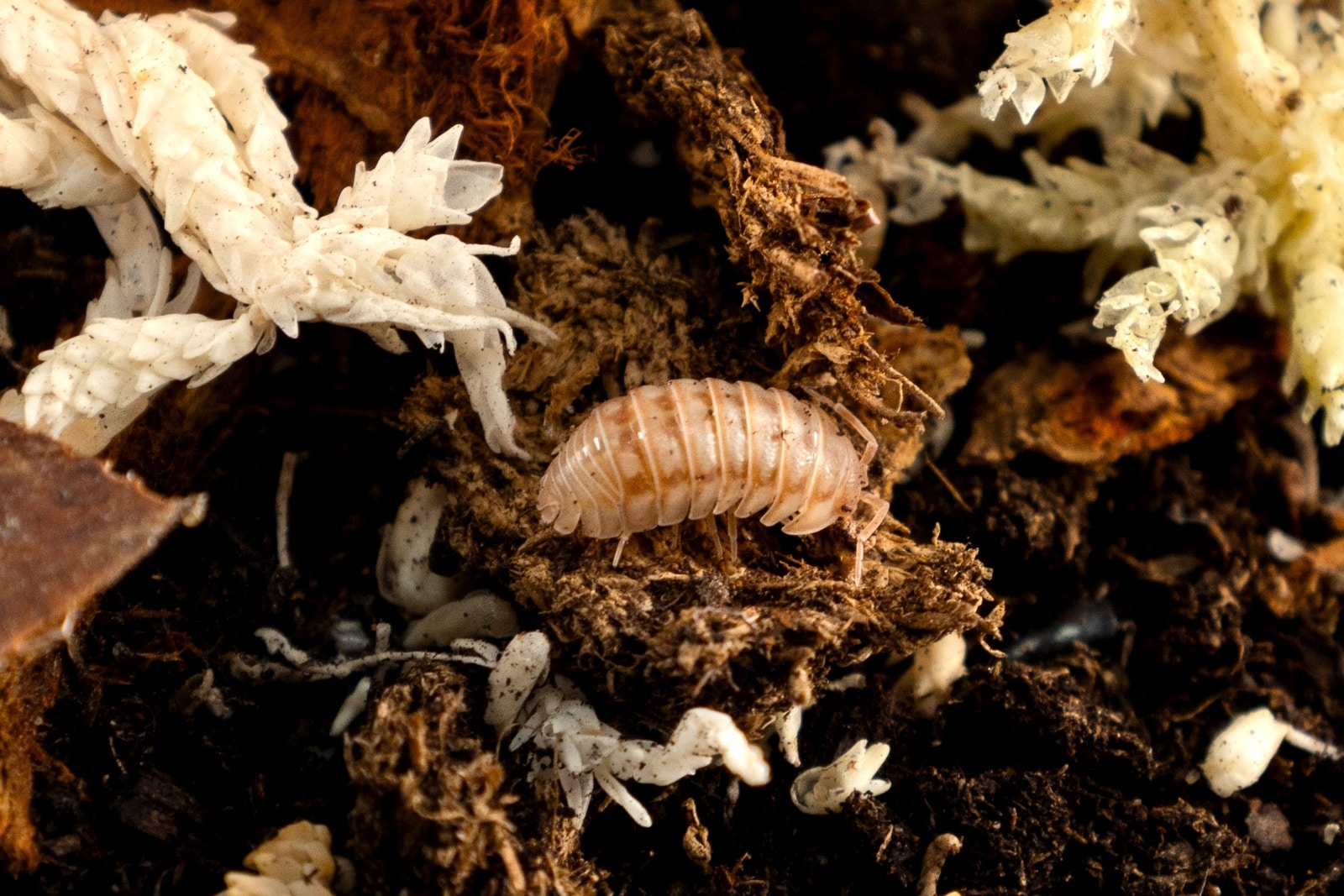
A. nasatum (Peach)
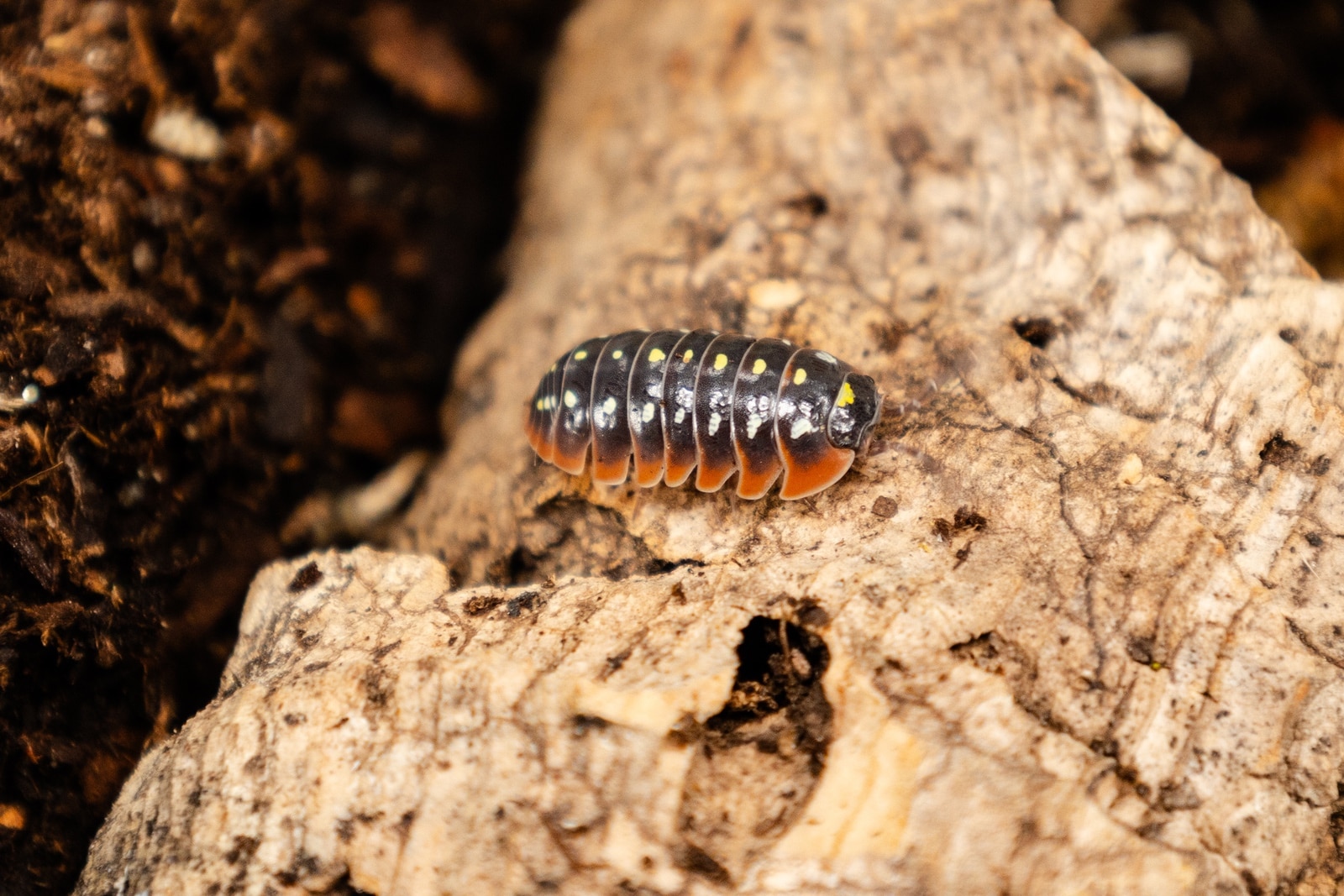
A. klugii (Clown)
Porcellio
Another isopod type is the Porcellio genus, more commonly known as a woodlouse. These creatures have a soft, flat body shape and cannot roll up into a ball, making them unique among their isopod counterparts.
A few examples: Porcellio laevis (Dairy cow, Milk Back), Porcellionides pruinosus (powder orange, powder blue) Porcellio scaber (Orange koi, lava, lemonade) Porcellio dilatatus (Giant canyon) Porcellio expansus (“High white”), Porcellio bolivari
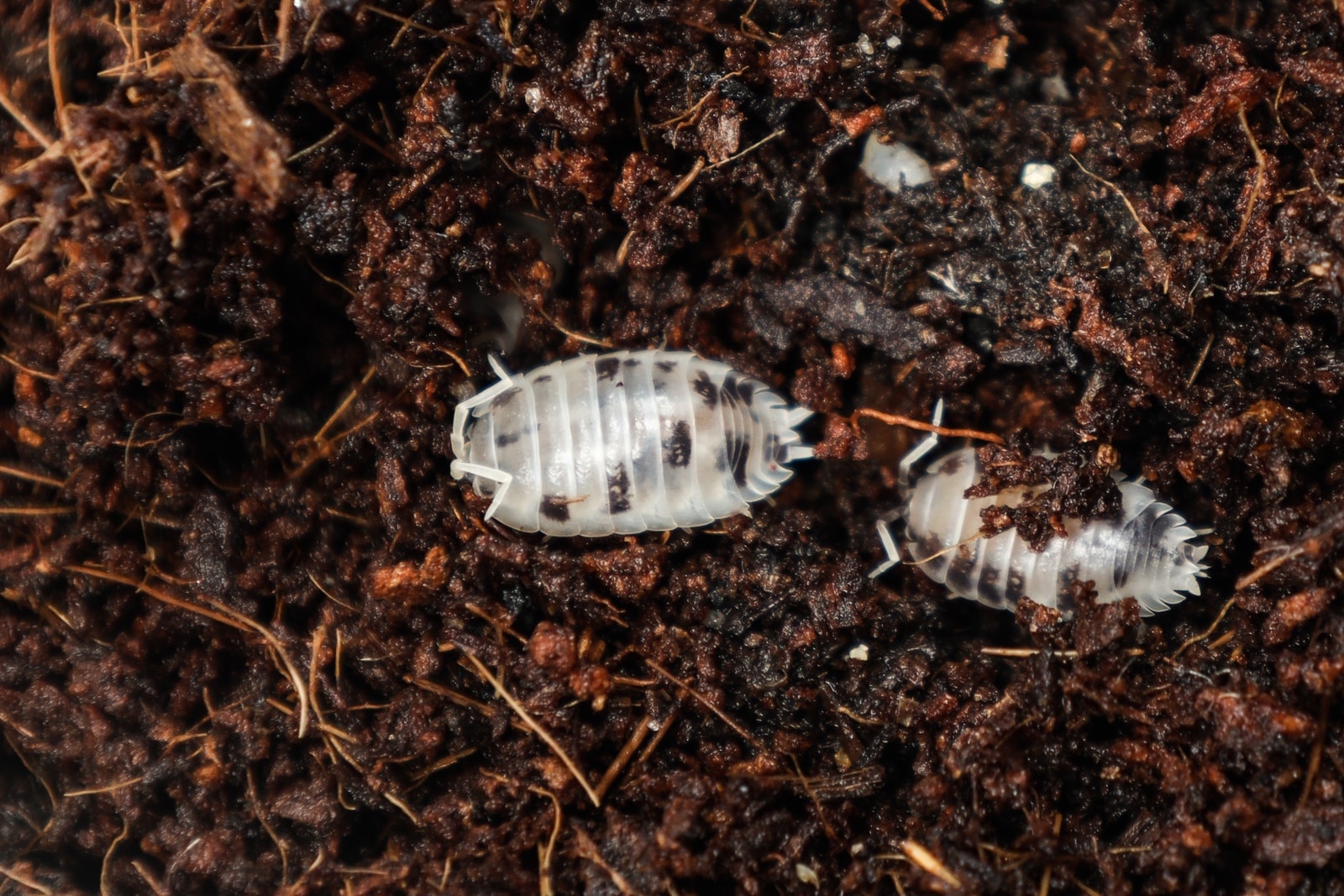
Porcellio laevis (Dairy cow)
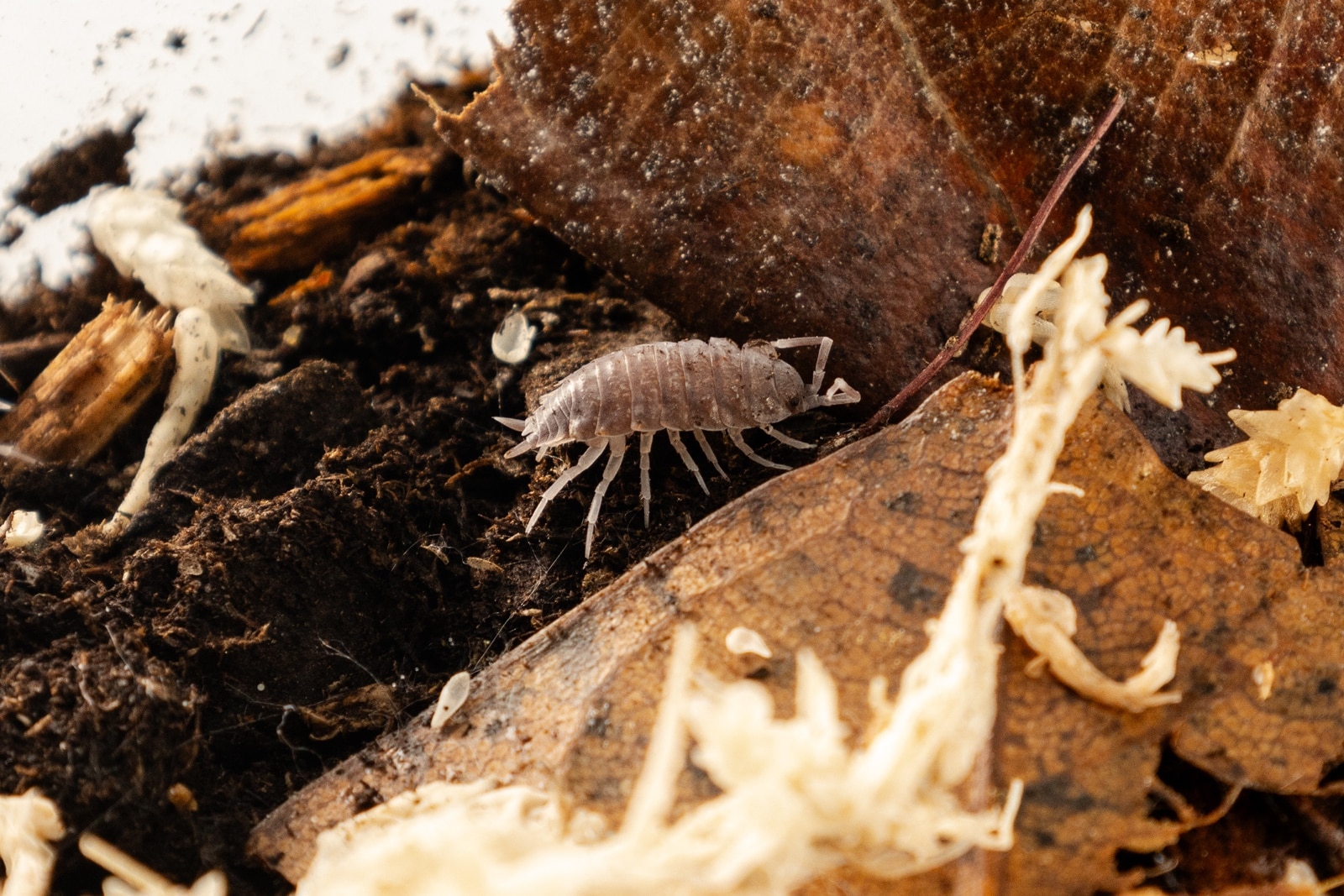
Porcellionides pruinosus (Powder blue)
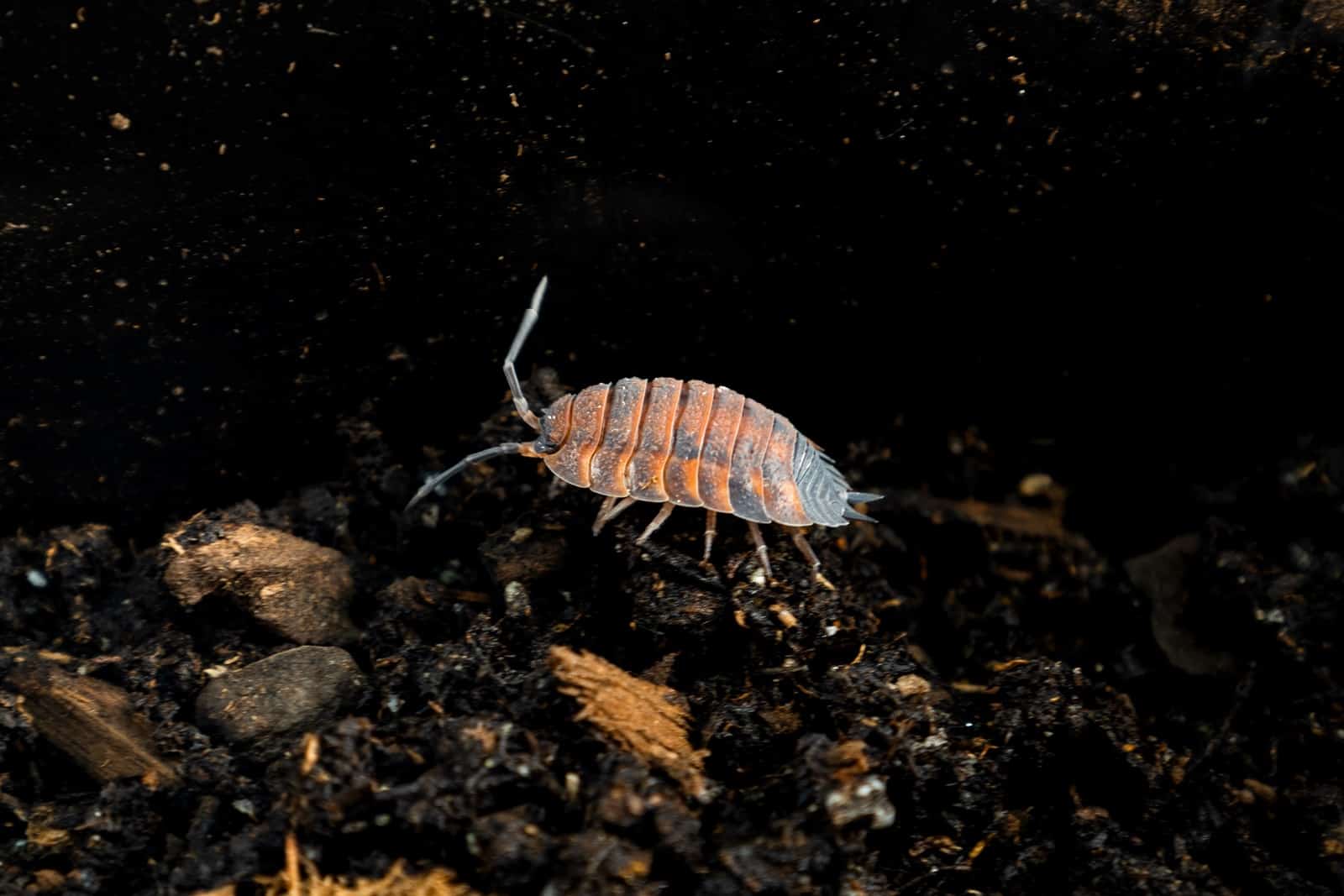
Porcellio scaber (Lava)
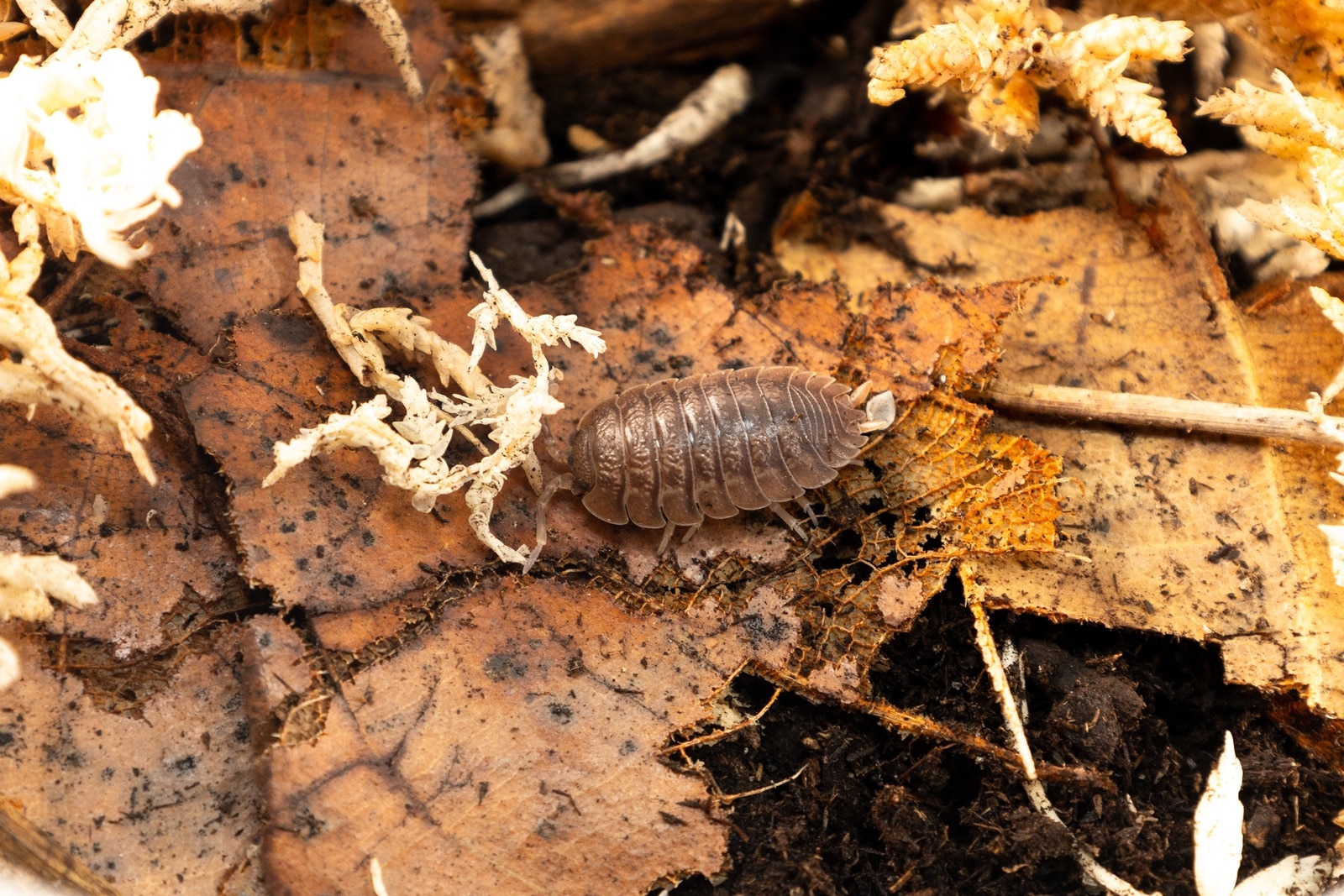
Porcellio dilatatus (Giant canyon)
Cubaris
Another favorite of isopod hobbyists is the Cubaris species, which, like the Armadillidium species, are domed and can roll into a ball; their body shape is longer and more slender. They also have an irresistibly cute “duck bill” face shape, earning them the nickname “duckies.”
A few examplex – Cubaris sp. Rubber duckies, Pink duckies (Pak Chong), Panda King, Cappuccino, Red Tiger, Blue pigeon
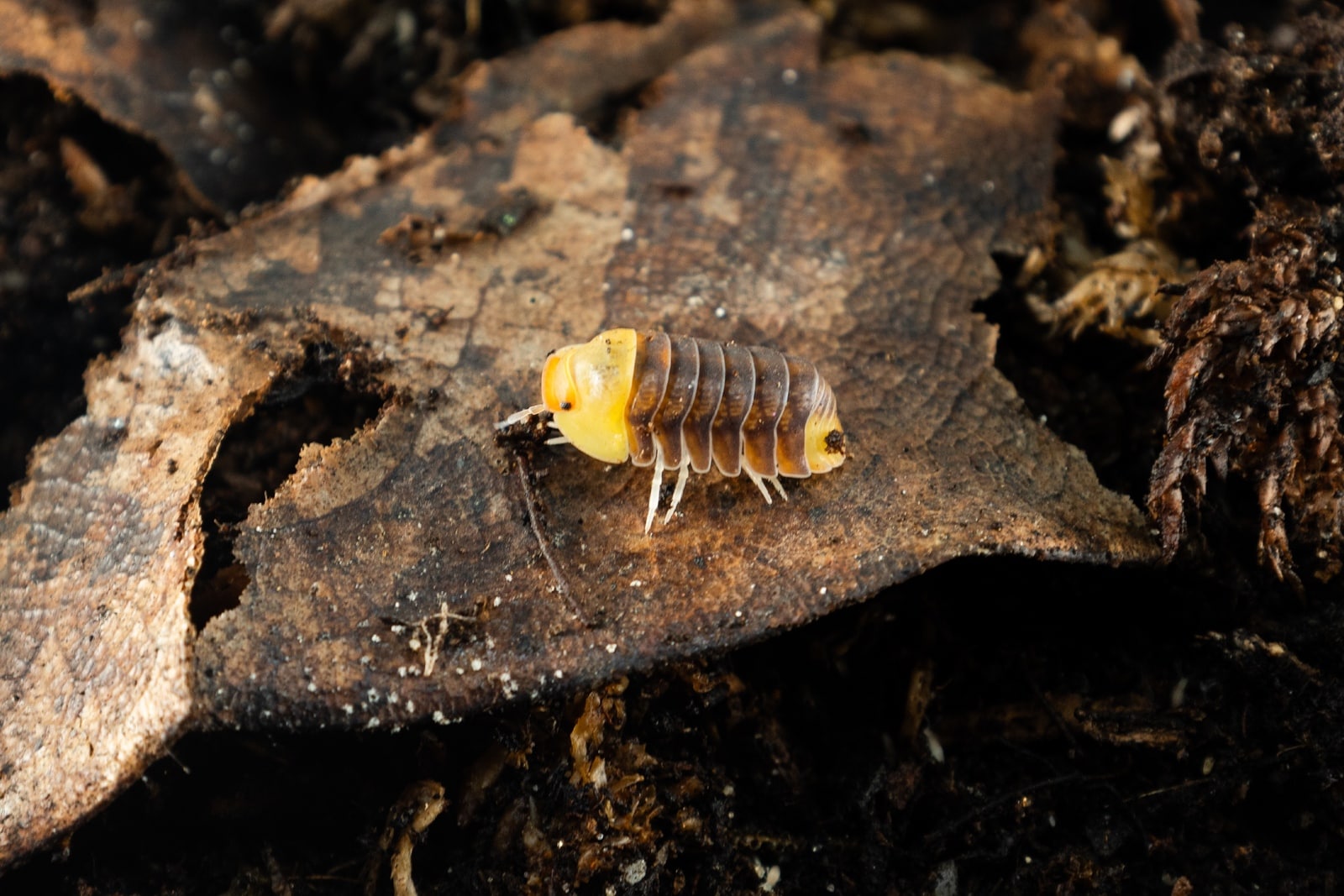
Rubber ducky
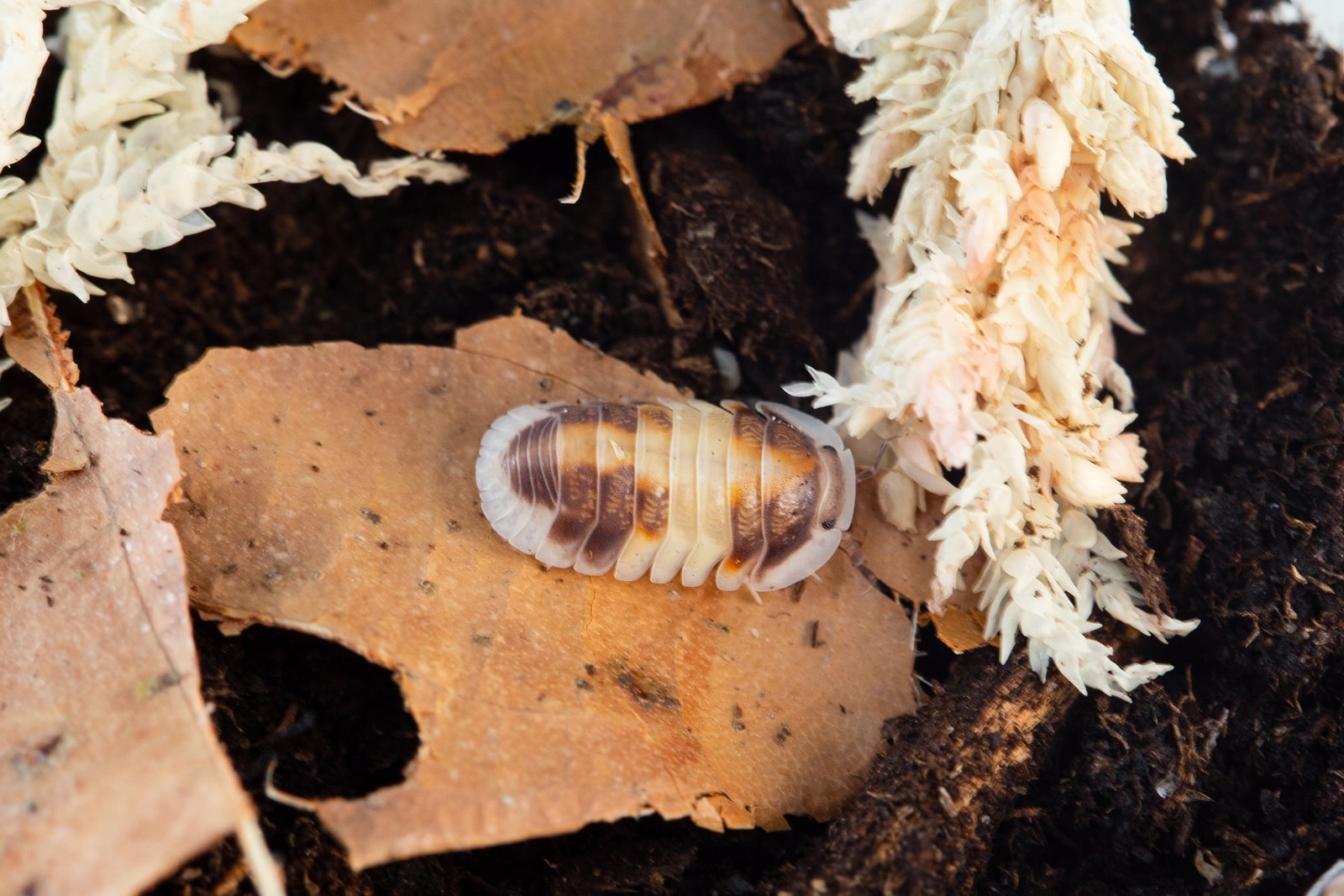
Cappuccino
Others:
Pineapple (Christarmadillidium murcatum)
Isopod Fun Facts
- Isopods are actually crustaceans and are more closely related to shrimp and crabs than insects!
- Isopods are found all over the world- even in the deep sea!
- Isopods eggs hatch within specialized pouches in the mother’s body and the young (known as mancae) emerge as miniature versions of the adults! The eggs and young can be seen on the mother’s belly before they emerge.
- Some isopods have the ability to regenerate lost limbs!
- Some isopods can roll up into a ball for protection. The term for this is “congubulation.”
- Isopods must molt or shed their exoskeleton in order to grow. They do this in two stages with the back half coming off first, followed by the front half. This results in what looks like two halves of an empty, white shell of the isopod left behind!
- Isopods are known to remove heavy metals such as copper, cadmium, lead, and zinc from soil and prevent them from leaching into groundwater!