
Jumping Spider

KEEPING JUMPING SPIDERS AS PETS
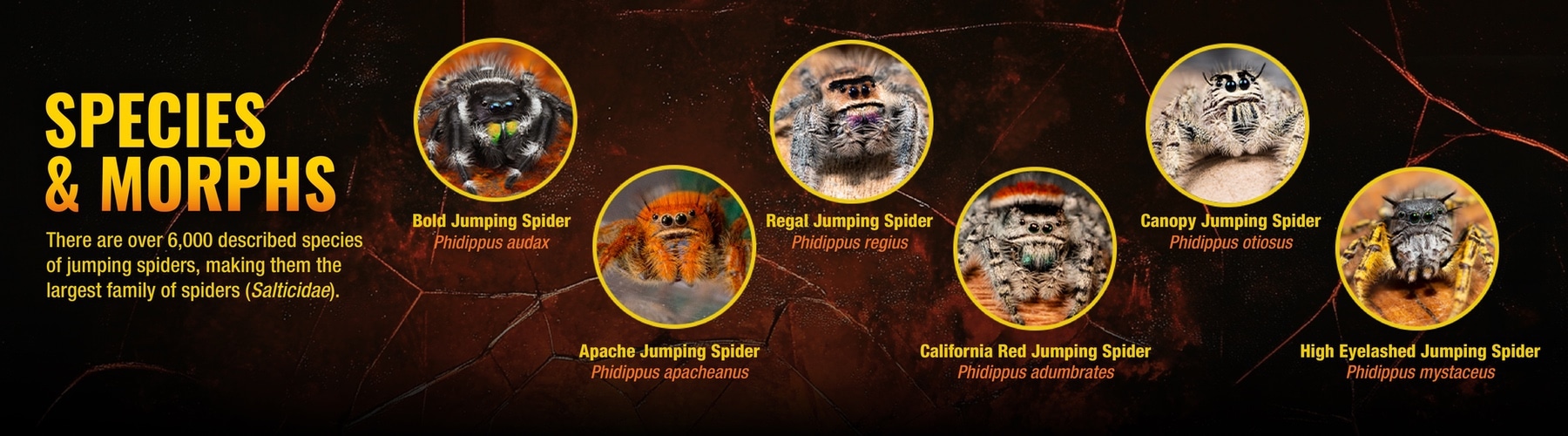
Jumping spiders are intelligent and make fun, fascinating, and personable pets. While some individuals may be shy, many seem to enjoy interacting with their keepers. They are generally friendly, and if handled properly, there is very little risk of being bitten.
HABITAT
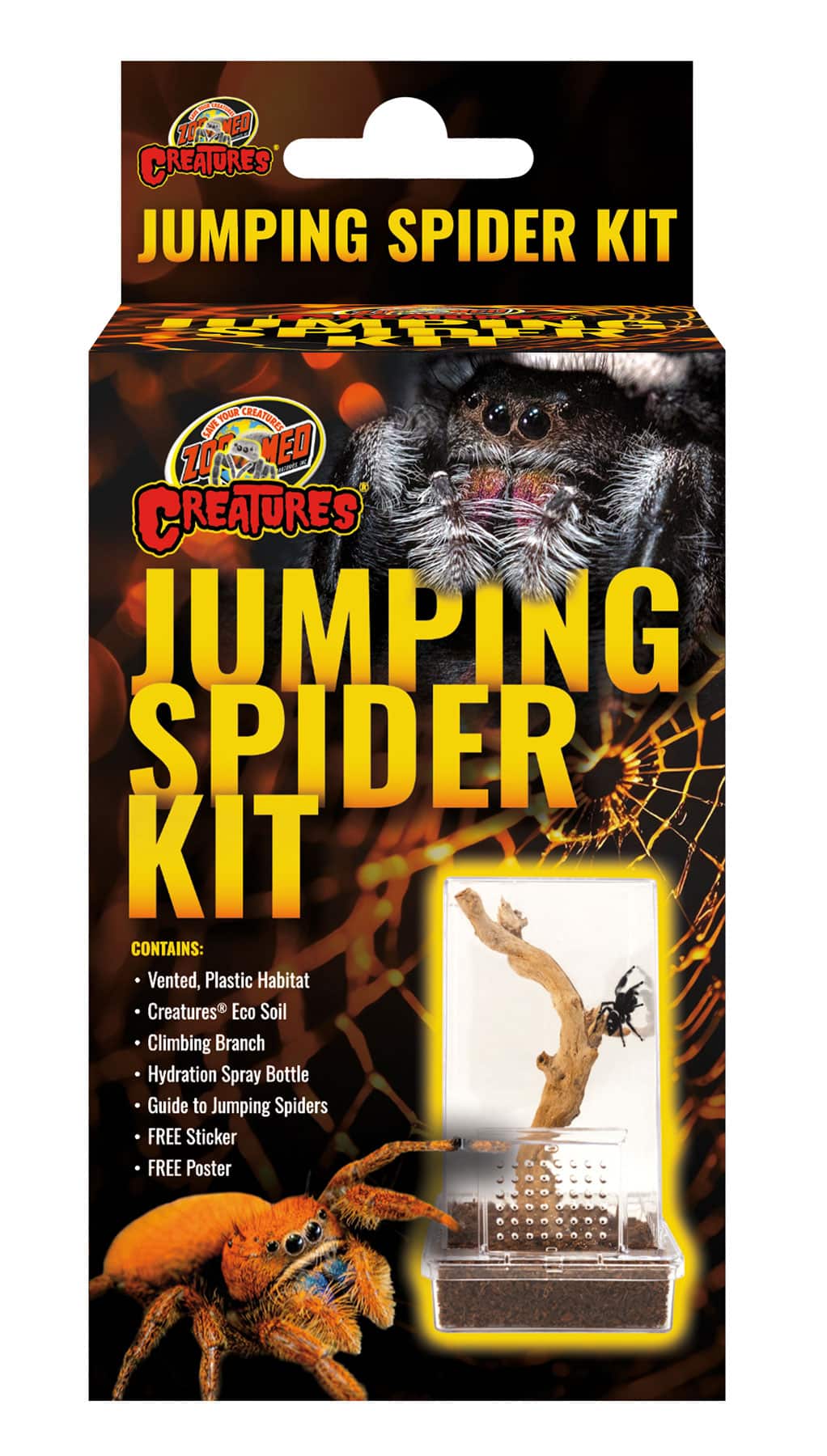
Jumping spiders do not require a large territory and are typically content in a small, secure enclosure. Jumping Spiders are arboreal. Their habitat should be taller than it is wide. Jumping spiders will build a resting web, commonly referred to as a “hammock,” which is typically located near the top of the enclosure.
TEMPERATURE
Most common jumping spider species thrive in room temperatures ranging from 69° – 85° F
LIGHTING
Jumping spiders have incredible color vision and require bright light in order to see correctly. Ambient light will likely be sufficient, but supplemental LED lights would be beneficial if the habitat is too dark.
NUTRITION
Jumping spiders are insectivores and will eat a variety of insects. Good options for feeding include fruit flies, small crickets, mealworms, bottle flies, and fly larvae.
HYDRATION & HUMIDITY
Although many jumping spiders get their hydration from fresh food sources, maintaining proper humidity is essential to prevent dehydration. Fine water droplets can be provided on the sides and décor of the habitat, allowing spiders to drink as needed.
Most jumping spiders thrive in humidity levels of 50-80%.